


Honor 400
Updated: Jan 22
SMARTPHONE TIER: MID TIER
Battery Capacity mAh: 5300
Honor 400: Efficiency-Driven Performance in the Mid-Range
SMARTPHONE BATTERY PERFORMANCE
Based on Price: Mid Tier (€200-€499)
Mid Tier Ranking #1

Learn more:
Video Review - Soon Available
The Honor 400 is a mid-range smartphone designed to deliver a premium-feeling experience without entering flagship pricing territory. Rather than prioritising raw performance figures, Honor focuses on display quality, photography, AI-assisted software features, and long-term usability. The result is a device that feels more sophisticated than its price suggests, appealing to users who value visual quality, camera versatility, and extended software support over benchmark dominance.
In terms of design, the Honor 400 adopts a clean, modern aesthetic with flat surfaces and restrained detailing. The front is dominated by a 6.55-inch AMOLED display with a resolution of 2736 by 1264 pixels, translating to a sharp pixel density of roughly 460 pixels per inch. The panel supports a 60–120 Hz adaptive refresh rate, allowing smooth scrolling and responsive animations while scaling back when high refresh rates are unnecessary. One of the display’s most notable characteristics is its extremely high peak brightness, which can reach up to 5000 nits in HDR scenarios. While this peak applies only to small portions of the screen, it still results in excellent outdoor visibility and strong HDR performance. The flat panel design improves usability and reduces accidental edge touches, and the phone carries an IP65 rating, offering protection against dust and water splashes.
Physically, the Honor 400 measures approximately 157 millimetres in height, 75 millimetres in width, and just 7.3 millimetres in thickness, with a weight of around 184 grams. This makes it compact and comfortable to handle compared to many modern mid-range devices. Although the frame and rear panel are made from plastic, the finish is solid and well-executed, avoiding the hollow feel common in cheaper handsets. The camera module is distinctive without being overly decorative, and colour options such as Midnight Black, Meteor Silver, and Desert Gold reinforce the phone’s understated, premium-leaning design language.
Performance is handled by Qualcomm’s Snapdragon 7 Gen 3 chipset, built on a 4-nanometre process. This processor delivers smooth and reliable performance for everyday activities such as web browsing, messaging, video streaming, navigation, and multitasking. While it does not compete with higher-tier chips found in performance-focused rivals, real-world responsiveness is consistently good. Casual and moderately demanding games run without issue at sensible settings, though the device is clearly not designed for sustained high-end gaming. Memory and storage configurations typically include 8 GB or 12 GB of RAM paired with 256 GB or 512 GB of internal storage, providing ample capacity for long-term use without expandable storage.
Photography is one of the Honor 400’s strongest areas. The rear camera system is built around a 200-megapixel main sensor with an f/1.9 aperture and optical image stabilisation. This sensor uses pixel binning to produce detailed 12.5-megapixel images with strong dynamic range and natural colour rendering. Despite the absence of a dedicated telephoto lens, the high-resolution sensor enables convincing 2× zoom and usable 4× zoom through sensor cropping, outperforming many mid-range competitors in this regard. A 12-megapixel ultra-wide camera also functions as a macro lens, offering added versatility, though it delivers less detail than the main sensor. On the front, a 50-megapixel selfie camera produces sharp, well-exposed images, though the lack of autofocus can occasionally lead to softer results at very close distances. Video recording supports up to 4K at 30 frames per second across all cameras, which is competitive for its class.
Battery performance is region-dependent. In Europe, the Honor 400 is equipped with a 5300 mAh silicon-carbon battery, while some other markets receive a larger 6000 mAh version. In everyday mixed usage, the phone comfortably lasts a full day and can stretch into a second day with lighter use. While its endurance is no longer class-leading in a market increasingly populated by ultra-large batteries, performance remains dependable and consistent. Charging is handled exclusively via cable, with support for up to 66 watts of wired fast charging, allowing a full recharge in under an hour with a compatible charger. Wireless charging is not included, reflecting the device’s mid-range positioning.
Connectivity is comprehensive and modern. The Honor 400 supports 5G networks, Wi-Fi 6, Bluetooth, USB Type-C, and NFC (availability varies by market). An infrared blaster is also included, enabling the phone to control compatible household electronics. Audio is delivered through a stereo speaker setup that provides good volume and clarity, though bass output is limited. Biometric security is managed by an under-display fingerprint sensor, which is reliable and accurate, if not as fast as ultrasonic alternatives.
On the software side, the Honor 400 ships with Android 15 layered with MagicOS 9.0. The interface places heavy emphasis on AI-assisted features, including live translation, transcription, contextual app suggestions, and a wide range of image-editing and generative tools such as image-to-video creation. While not every AI feature feels essential, the overall suite adds meaningful value and helps differentiate the device from more conservative competitors. MagicOS continues to divide opinion due to its iOS-inspired design choices and preinstalled apps, but performance is smooth and customisation options are extensive. Crucially, Honor commits to six years of Android version updates and security patches, placing the Honor 400 among the best-supported smartphones in its price segment.
Overall, the Honor 400 represents a carefully balanced approach to the modern mid-range smartphone. It does not aim to dominate performance charts, but instead excels in areas that matter most to everyday users: a high-quality display, a highly capable main camera, reliable battery life, fast wired charging, and exceptional software longevity. For users seeking a refined, future-proof smartphone with strong photographic credentials and long-term support, without stepping into flagship pricing, the Honor 400 stands out as a compelling and well-rounded choice.
Pros | Cons |
|
|
|
|
|
|
|
|
|
|
|
|
|
|
|
|
| |
| |
|
ViserMark Labels for the Honor 400
Please take a look at the following information about the battery performance of the Honor 400:
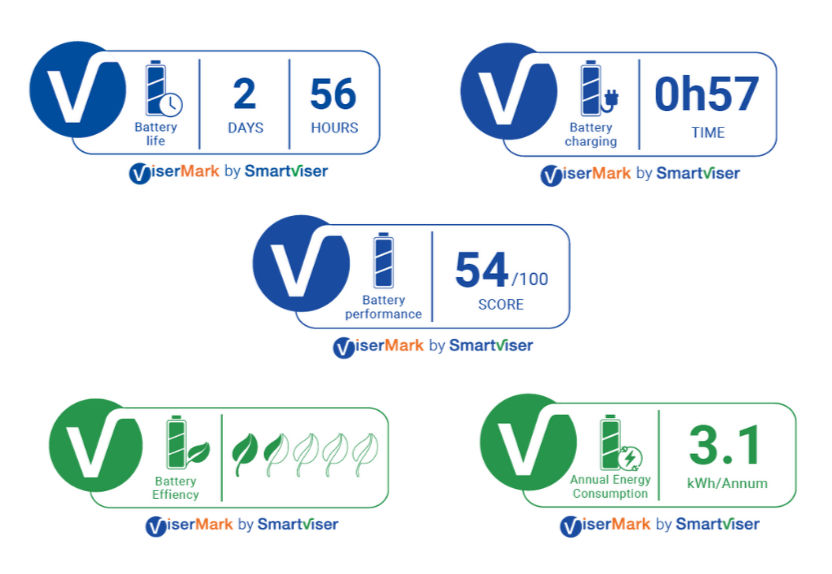
Battery Life: The Honor 400 delivers a notably strong real-world endurance performance, achieving up to 56 hours of active use, which translates to approximately two full days under balanced usage conditions. This places it clearly ahead of the mid-tier average and above competitors such as the Motorola Moto G56 5G and the Honor 200 Lite. Even with its bright 6.55-inch AMOLED display and high peak brightness capability, the Honor 400 maintains consistent runtime thanks to effective system optimisation and the efficiency of the Snapdragon 7 Gen 3 platform. For users who value dependable multi-day battery life without aggressive power management compromises, the Honor 400 proves to be a reliable and well-balanced option.
Battery Charging: Charging performance is a clear strength of the Honor 400. The device supports 66-watt wired fast charging, allowing it to recharge from empty to full in under one hour with a compatible power adapter. This represents a meaningful advantage over more conservatively charged competitors in the same price bracket and positions the Honor 400 competitively within the mid-range segment. As with many modern devices, no charger is included in the box, requiring users to supply their own suitable USB-C charger to reach peak speeds. Wireless charging is not supported, but given the rapid wired charging performance, this omission is unlikely to be a major drawback for most users.
Battery Performance & Efficiency: Where the Honor 400 truly stands out is in battery efficiency and energy optimisation. SmartViser’s task-based testing shows that the device outperforms the mid-tier average across a wide range of real-world scenarios, including social media use, video playback, web browsing, and camera usage. Annual energy consumption was measured at approximately 3.1 kWh, which is significantly lower than the mid-tier reference value of 3.64 kWh and well below the Motorola Moto G56 5G’s 4.6 kWh. This efficiency is reflected in the Honor 400’s battery performance score of 54, surpassing both the mid-tier average and the Honor 200 Lite. These results highlight Honor’s strong hardware-software optimisation, enabling long usage times with reduced power draw and making the Honor 400 one of the most energy-efficient devices in its class.
Specification Overview - Released Date: September 2025
Body & Build:
Dimensions: 157 × 75 × 7.3 mm
Weight: 184g
Materials: Glass front, plastic back, plastic frame
Durability: IP65 – dust-tight and resistant to water jets
Design: Slim, flat-edged design with a compact footprint; understated, premium-leaning finish with a distinctive dual-camera module; well balanced and comfortable for one-handed use
Display:
Size: 6.55-inch AMOLED
Resolution: 2736 × 1264, ~460 ppi
Refresh Rate: Adaptive 60–120Hz
Brightness: Up to 5000 nits peak (HDR, partial area)
HDR Support: HDR video playback supported (no formal Dolby Vision certification)
Protection: Strengthened front glass (manufacturer-rated drop resistance; no Gorilla Glass branding specified)
Operating System:
OS: Android 15 with MagicOS 9.0
Support: 6 years of Android OS updates and security patches (Honor policy as of 2025)
Chipset & Performance:
Global Variant:
Processor: Qualcomm Snapdragon 7 Gen 3 (4nm)
CPU: Octa-core (1× Cortex-A715 + 3× Cortex-A715 + 4× Cortex-A510 configuration)
GPU: Adreno GPU
Memory & Storage:
Configurations:
256GB + 8GB RAM
256GB + 12GB RAM (market-dependent)
512GB + 12GB RAM (market-dependent)
Expandable Storage: Not supported
Storage Tech: UFS (generation not officially specified)
Connectivity & Features:
Network: GSM / HSPA / LTE / 5G
SIM: Nano-SIM / Dual Nano-SIM (market-dependent, no eSIM)
Wi-Fi: Wi-Fi 6
Bluetooth: Bluetooth 5.x
NFC: Available (market-dependent)
Infrared Blaster: Yes
USB-C: USB Type-C 2.0
Biometrics: Under-display fingerprint sensor
Other Features: AI Photography, AI image-to-video generation, Magic Portal, Circle to Search, AI translation and transcription tools, accelerometer, gyroscope, compass, proximity sensor
Audio:
Speakers: Stereo speakers
3.5mm Jack: Not included
Camera System:
Rear Cameras:
200MP main (f/1.9, OIS, PDAF, ~1/1.4" sensor, pixel binning)
12MP ultrawide / macro (f/2.2, AF, ~102° FoV)
Video: Up to 4K@30fps (rear cameras)
Front Camera: 50MP (f/2.0, fixed focus) Video: 4K@30fps
Colours Available: Midnight Black, Meteor Silver and Desert Gold
Performance - HOW WE TEST
ViserMark offers a comprehensive range of battery performance test results based on different criteria and benchmarks for evaluating a smartphone's performance. Our tests are performed using the strictest protocol in a controlled environment to ensure repetition and consistency powered by SmartViser's test automation solution viSer.

VWS Analytics Studio is a complementary product to the viSer Test Automation solution. It enhances the viSer user experience and is the fastest way to analyse and view smartphone test results.
We have used the interactive dashboard to show you the recent test results and translated them into ViserMark Labels.
Join our readers to receive the latest update to our smartphone battery performance scores and performance reviews as soon as we finish testing!

Smartphone Battery Performance - FULL TEST RESULTS AND REVIEW
ViserMark has put the Honor 400 through our testing protocol, based on real smartphone usage from 100% battery level down to power off. This includes daily activities, such as calls, web, video and music streaming, gaming, social networks, picture and video capture, and standby. All activities are executed in a defined order and timeline.
These test results, show how the Honor 400 performed and the scores achieved.
1. Battery Performance
The Honor 400 achieved a battery performance score of 54/100, placing it well above the mid-tier average of 44.62/100 and clearly ahead of both the Motorola Moto G56 5G (40) and the Honor 200 Lite (46). This result positions the Honor 400 as one of the stronger battery performers in its segment, not only outperforming its direct competitors but also demonstrating a level of optimisation that exceeds what is typically expected in the mid-range category. While it does not compete with ultra-endurance-focused devices, the Honor 400 delivers a consistently high level of battery efficiency and stability across everyday use cases, reflecting a well-balanced and mature power profile.

Charging is handled through 66W wired fast charging, allowing the device to reach a full charge in under one hour with a compatible charger. As is now common in this segment, no charger is included in the box. Compared to more conservatively charged rivals such as the Moto G56 5G and the Honor 200 Lite, the Honor 400’s charging performance is notably faster and more practical for daily use. Wireless and reverse charging are not supported, but the fast wired solution largely compensates for these omissions within its pricing tier.

Overall, the Honor 400 demonstrates an excellent energy-to-performance ratio, particularly under real-world usage conditions. SmartViser workload testing shows that the device consumes less power than the Moto G56 5G across key scenarios. For everyday users, the Honor 400 offers a combination of long runtime, fast recharging, and high efficiency, making it one of the most convincing battery performers in the mid-range smartphone market.
2. Battery Life
In ViserMark’s battery life testing, the Honor 400 delivered up to 56 hours of active usage, corresponding to approximately 2 full days of typical real-world use. This result places it clearly above the mid-tier average, which stands at around 46 hours (1.79 days), and well ahead of the Motorola Moto G56 5G, which achieved 39 hours (1.5 days). The Honor 400 also matches the endurance of the Honor 200 Lite in days of use, while extending its lead when measured in total active hours.

This strong endurance is achieved despite the Honor 400 balancing a high-resolution AMOLED display and demanding usage scenarios. The results highlight effective power management from the Snapdragon 7 Gen 3 platform, which allows the device to sustain long runtimes without aggressive background restrictions or noticeable performance throttling. Compared to the broader mid-tier segment, the Honor 400 demonstrates a more efficient conversion of battery capacity into usable screen-on time.

When compared directly with its closest competitors, the Honor 400 maintains a clear advantage. The Moto G56 5G falls noticeably behind in both hours and days of use, while the Honor 200 Lite, although competitive in total days, does not match the Honor 400’s longer active usage time. This indicates that the Honor 400 sustains heavier workloads more effectively, particularly during screen-intensive activities.

For everyday users, the Honor 400’s two-day battery life provides a comfortable buffer for mixed usage patterns, including social media, video streaming, web browsing, and camera use. Even heavier users are likely to reach the end of a full day with significant charge remaining. Overall, the Honor 400 stands out as a strong endurance performer within the mid-range segment, delivering consistent and reliable battery life that exceeds typical expectations for its class.
The Honor 400 and Honor 200 Lite were analysed for battery consumption across a wide range of everyday tasks using SmartViser's viSer and VWS Analytics Studio. The comparison highlighted differences in power usage for activities such as social media, calls, gaming, camera, and web browsing.
During social media usage, the Honor 400 shows a slightly higher energy draw than the Honor 200 Lite, indicating marginally higher consumption during continuous scrolling and screen-on activity. However, this difference remains moderate and does not translate into a noticeable disadvantage in overall endurance. In outgoing voice calls, the situation is reversed: the Honor 400 consumes significantly less power than the Honor 200 Lite, highlighting more efficient handling of sustained connectivity and voice communication.
In gaming, both devices perform at a similar level, with nearly identical power consumption. This suggests comparable efficiency under moderate graphical load, despite differences in chipset class and performance capability. For download and upload tasks, the Honor 400 again proves more efficient, drawing less power than the Honor 200 Lite during data-intensive background activity.
Camera usage is one of the clearest differentiators. The Honor 400 consumes noticeably more power than the Honor 200 Lite during extended camera use, reflecting the higher demands of its more advanced imaging hardware and processing. This increased consumption is expected given the Honor 400’s stronger camera system and does not indicate poor optimisation.
In media-related tasks, the results are mixed. During YouTube streaming, the Honor 200 Lite is slightly more efficient, while in video replay, the Honor 400 draws substantially more power. Conversely, during music playback, the Honor 400 is more efficient, consuming less energy than the Honor 200 Lite. Web browsing shows near parity between the two devices, with only minimal differences in consumption.

Overall, the Honor 400 exhibits a more demanding but also more performance-oriented power profile. It is more efficient in communication, data transfer, and audio playback, while drawing more power during camera use and certain video workloads that place greater strain on its imaging hardware and processing pipeline. These higher consumption figures reflect the Honor 400’s stronger feature set rather than inefficient tuning.
To offset its higher hardware demands, the Honor 400 uses a larger 5,300mAh battery, allowing it to support a more advanced display, camera system, and feature set while still achieving battery life results comparable to the Honor 200 Lite. The Honor 200 Lite, by contrast, relies on a simpler and less demanding platform paired with a 4,500mAh battery, benefiting from lower baseline power consumption. As a result, both devices reach similar overall battery performance scores through different approaches: the Honor 400 balances greater capability with increased capacity, while the Honor 200 Lite achieves efficiency through lighter workloads. This parity confirms that the Honor 400’s higher power draw reflects its technological improvements rather than weaker battery optimisation.
When comparing the Honor 400 with the Motorola Moto G56 5G across SmartViser’s battery consumption tests, the differences in optimisation become immediately clear. Although both devices occupy the same mid-tier category, their behaviour under everyday workloads reflects two distinct energy-management approaches.

During social media usage, the Motorola Moto G56 5G draws slightly more power than the Honor 400, indicating higher energy consumption during continuous scrolling and screen interaction. This gives the Honor 400 a modest efficiency advantage in light, app-driven scenarios.
The difference becomes far more pronounced in outgoing voice calls, where the Moto G56 5G consumes significantly more power than the Honor 400, highlighting weaker optimisation for sustained connectivity. A similar pattern appears in gaming, where the Moto G56 5G again shows notably higher power draw, while the Honor 400 maintains tighter control under prolonged load.
In download and upload tasks, the Honor 400 proves clearly more efficient, drawing considerably less power than the Moto G56 5G during data-intensive activity. Camera usage further reinforces this trend, capturing photos or recording video places a much heavier strain on the Moto G56 5G, whereas the Honor 400 remains comparatively restrained despite its more advanced imaging hardware.
In media-related tasks, the results are more nuanced. During YouTube streaming and music playback, the Moto G56 5G consistently consumes more power, meaning long viewing or listening sessions drain its battery more quickly. In video replay, however, consumption levels are broadly similar between the two devices, with the Honor 400 drawing slightly more power than the Motorola. This difference is modest and does not materially affect overall endurance.
Web browsing, which combines continuous display use with bursts of network activity, again favours the Honor 400, as the Moto G56 5G shows higher and less stable power draw during extended sessions.
In summary, the Honor 400 demonstrates superior battery optimisation across most tested workloads, consuming less power in communication, gaming, data transfers, camera use, streaming, and browsing. While video replay shows near parity, with a small efficiency edge for the Moto G56 5G, the Honor 400 remains the more balanced and battery-efficient device overall. Given that both devices are equipped with similarly sized batteries, this advantage highlights stronger optimisation on the Honor 400, making it particularly well suited to users with mixed or media-heavy usage patterns.
When comparing the battery behaviour of the Honor 400, Honor 200 Lite, and Motorola Moto G56 5G using SmartViser’s viSer testing, it becomes clear that each phone approaches power management very differently, and these differences heavily influence real-world endurance.

The Honor 400 emerges as the most consistently efficient device overall. It consumes less power than the mid-tier average in nearly every category, including outgoing calls, gaming, downloads and uploads, YouTube streaming, media playback, and web browsing. While its consumption during social media use and camera activity is slightly higher than that of the Honor 200 Lite, it remains well below both the Moto G56 5G and the segment average. This balanced profile makes the Honor 400 particularly well suited to mixed and sustained usage patterns.
The Honor 200 Lite delivers strong results in lighter workloads, especially social media, gaming, video replay, and web browsing, where it often matches or slightly outperforms the Honor 400. However, it becomes less efficient during outgoing calls, data transfers, and media playback, and its camera usage draws significantly less power largely due to its simpler imaging hardware. Overall, it performs better than the mid-tier average in most categories but lacks the consistency of the Honor 400 under heavier or more diverse workloads.
The Motorola Moto G56 5G shows the highest power consumption across nearly all tasks. It exceeds the mid-tier average in every usage category and draws substantially more power during calls, gaming, camera use, streaming, and browsing. While it remains functional in light social media use, its energy demand rises sharply once workloads intensify, making it the least efficient device in this comparison.
Compared to the mid-tier reference, the Honor 400 consistently outperforms the segment norm, the Honor 200 Lite remains competitive with particularly good efficiency in lighter tasks, and the Moto G56 5G falls well behind due to persistently higher energy consumption. Overall, the results confirm the Honor 400 as the most refined and well-optimised device in this group, combining modern hardware capability with superior real-world battery efficiency.
In ViserMark’s battery efficiency evaluation, the Honor 400 achieved a 1.5-leaf rating, placing it above the mid-tier average of 1.08 leaves and clearly ahead of the Motorola Moto G56 5G, which scores just 0.5 leaves. The Honor 400 also matches the Honor 200 Lite, with both devices sharing the highest efficiency rating within this comparison group. These results position the Honor 400 among the more energy-efficient options in the mid-tier segment.

This strong efficiency score reflects the Honor 400’s balanced handling of real-world workloads. Despite featuring more modern and demanding hardware, the device maintains controlled energy consumption across most active-use scenarios. Tasks such as social media, calls, browsing, and streaming are handled with stable and predictable power draw, avoiding the sharp spikes in consumption seen on the Moto G56 5G during screen-on or connectivity-heavy activity.

The 1.5-leaf rating indicates that the Honor 400 does not merely rely on battery capacity to deliver endurance, but benefits from effective system optimisation. While it matches the Honor 200 Lite in overall efficiency score, the Honor 400 achieves this while supporting a more advanced feature set, highlighting stronger power management rather than lighter hardware demands.
In summary, the Honor 400 stands out as a highly efficient mid-tier smartphone, outperforming the segment average and significantly surpassing the Moto G56 5G in energy efficiency. Its results confirm a well-optimised balance between modern performance and controlled power usage, making it a strong choice for users who want dependable endurance without sacrificing capability.
According to ViserMark’s annual energy consumption testing, the Honor 400 records an estimated usage of 3.1 kWh per year, placing it well below the mid-tier average of 3.64 kWh and significantly lower than the Motorola Moto G56 5G, which reaches 4.6 kWh annually. This result highlights the Honor 400’s strong long-term efficiency, especially when compared with other mid-tier devices operating under similar real-world usage conditions.

The Motorola Moto G56 5G stands out as the least efficient device in this comparison, consuming substantially more energy over the course of a year. This aligns with its higher power draw across demanding tasks such as gaming, camera use, video streaming, and extended connectivity, all of which contribute to increased long-term energy consumption.

The Honor 200 Lite achieves the lowest annual energy consumption at 2.9 kWh, reflecting its lighter hardware demands and more conservative performance profile. The Honor 400 sits slightly above it, but this difference is modest and expected given the Honor 400’s more advanced display, camera system, and overall feature set.
Overall, the Honor 400 demonstrates an excellent balance between capability and efficiency. Despite offering a more modern and demanding hardware platform than the Honor 200 Lite, it maintains annual energy consumption well below the segment average and far lower than the Moto G56 5G. This controlled consumption profile not only supports strong real-world battery life, but also contributes to lower long-term energy use, making the Honor 400 one of the more energy-efficient and sustainable choices in its class.
Who Should Buy the Honor 400?
The Honor 400 is an excellent choice for users who want a modern, well-rounded smartphone that balances advanced features with strong efficiency and dependable everyday performance. It is particularly well suited to people who value long battery life, fast charging, a high-quality display, and a capable camera system, without stepping into flagship pricing.
With its bright AMOLED display, slim and lightweight design, and solid IP65 dust and water resistance, the Honor 400 appeals to users who want a device that feels contemporary and premium in daily use. Its high peak brightness makes it especially attractive for those who frequently use their phone outdoors, while its refined design ensures comfort during extended use. Combined with Honor’s long-term software support commitment, the Honor 400 is a good fit for users planning to keep their phone for several years.
The Honor 400 stands out in battery efficiency and real-world endurance, making it ideal for users with mixed or media-heavy usage patterns. People who spend their day moving between social media, browsing, streaming video, navigation, messaging, and camera use will benefit from its balanced power management and consistent two-day battery life. Its strong optimisation allows it to handle heavier workloads more gracefully than many mid-tier rivals, without the rapid battery drain often seen in performance-focused devices.
The phone is also a strong option for content creators and photography-focused users in the mid-range segment. Its advanced camera system delivers more flexibility and image quality than simpler alternatives, making it well suited for users who frequently capture photos or video as part of their daily routine.
However, the Honor 400 is not aimed at hardcore gamers or users seeking flagship-level performance. While its chipset delivers smooth day-to-day responsiveness, it is not designed for sustained high-frame-rate gaming or intensive multitasking sessions. Likewise, users who prioritise wireless charging or premium materials such as metal frames may find the feature set slightly conservative.
Charging is fast and practical thanks to 66W wired charging, but the lack of wireless charging may matter to some users accustomed to more premium conveniences.
Ultimately, the Honor 400 is ideal for users who want a modern, efficient, and capable smartphone that excels in real-world use rather than benchmark chasing. It combines strong battery efficiency, fast charging, a high-quality display, and a capable camera system into a well-balanced package, making it an excellent choice for everyday users who want performance, endurance, and longevity without paying flagship prices.
ViserMark VERDICT
The Honor 400 - what's it like to use?
Using the Honor 400 feels like engaging with a more modern, confident take on the mid-range smartphone experience, one that blends stronger hardware capabilities with careful optimisation. Day-to-day activities such as browsing, messaging, social media, navigation, and video streaming feel smooth and responsive, with MagicOS running fluidly across typical usage scenarios. Transitions are quick, multitasking is handled comfortably, and the overall experience feels refined rather than overstretched.
The 6.55-inch AMOLED display plays a major role in shaping this experience. Colours are vibrant, contrast is deep, and the adaptive refresh rate helps keep scrolling and animations feeling natural without unnecessary battery drain. One of the most noticeable advantages in daily use is brightness: outdoor visibility is excellent, making the Honor 400 particularly comfortable to use in bright environments. The in-display fingerprint sensor is reliable and fast, unlocking the device with minimal delay and contributing to a seamless interaction flow.
Where the Honor 400 really distinguishes itself is in how it handles mixed and heavier everyday workloads. Its newer platform allows it to move more confidently between tasks such as streaming, photography, browsing, and data-heavy apps without the sense of fragility often associated with mid-tier phones. The phone remains stable under load, and while it does draw more power when advanced features are used, this is well balanced by strong battery management and fast charging.
That said, the Honor 400 is not designed as a hardcore gaming device. While casual and moderate gaming runs well, sustained high-performance gaming sessions can expose its thermal and performance limits compared to true flagship or gaming-focused models. MagicOS also has a distinct visual identity that may take some adjustment for users coming from stock Android or other ecosystems.
Despite these caveats, the Honor 400 proves to be a confident, comfortable, and capable daily companion. It feels well suited to users who want a phone that can handle modern demands, including frequent camera use, media consumption, and multitasking, without constant concern for battery drain or responsiveness. Rather than chasing extreme performance, the Honor 400 focuses on delivering a smooth, bright, and efficient experience that fits naturally into everyday life, making it a strong and reassuring option in the mid-range space.
VCX (Valued Camera eXperience)
The VCX Forum has been working with its members on the system and infrastructure as a non-profit organisation. We strive to improve our technology to develop and exchange accurate and objective quality and performance indicators, which is our ultimate goal. We will also serve as a compass for the smartphone camera industry. We appreciate your interest in the VCX Forum.
VCX Forum: No review
Background
Established in 2013, HONOR is a leading global provider of smart devices, committed to becoming an iconic tech brand that enables a smart life for all people, across all scenarios and channels. With over 13,000 employees, more than 60% of whom are dedicated to research and development, HONOR focuses on innovation, quality, and service. The brand's extensive R&D capabilities and forward-looking technology empower people worldwide to achieve more. HONOR's impressive portfolio of innovative products and a vast retail presence with over 45,000 stores support more than 200 million active devices, creating a new intelligent world for everyone.
Written by

Marcella Frattari is the Communication Marketing and Lead Generation Manager at SmartViser, playing a key role in shaping the company's communication and marketing strategies. With a background in journalism and a passion for digital communication, Marcella focuses on improving SmartViser's overall online presence and engagement. Her dedication to clear, effective communication and creative content makes her a valuable asset to the team.
Press Contact
Marcella Frattari: Contact@visermark.com
Our Resources
ViserMark Scores | ViserMark Reviews | Success Stories | Latest Articles |
Discover what ViserMark is all about. | Read ViserMark's latest in-depth smartphone battery reviews. | Discover our main success stories with Telecoms and other industries. | Read more articles on our battery life, performance reviews, and test results. |


Comments