


Xiaomi 15T
SMARTPHONE TIER: HIGH TIER
Battery Capacity mAh: 5500
Xiaomi 15T: Big Screen, Strong Camera, Balanced Power
SMARTPHONE BATTERY PERFORMANCE
Based on Price: High Tier (€500-€699)
High Tier Ranking #3

Learn more:
Video Review - Soon Available
The Xiaomi 15T is a high-tier smartphone positioned just below flagships, designed to deliver a near-premium experience while avoiding the excesses and pricing of top-end models. Rather than acting as a compromise device, it focuses on refining core flagship traits such as display quality, battery endurance, camera reliability, and long-term software support. The result is a phone that feels deliberately upscale and complete, aimed at users who want flagship polish without paying for marginal gains they may never notice.
From a design perspective, the Xiaomi 15T adopts a restrained, modern aesthetic that prioritises solidity and usability over visual theatrics. It features flat front and rear surfaces with softly rounded corners, creating a shape that is comfortable to hold despite its large footprint. Measuring approximately 163.2 mm in height, 78.0 mm in width, and just 7.5 mm in thickness, and weighing around 194 grams, it is undeniably large but well balanced. While the mid-frame is plastic rather than metal, the chassis is rigid and well assembled, avoiding the hollow or flimsy sensation common in cheaper devices. Gorilla Glass 7i protects the front, the rear uses a reinforced glass-fiber material, and the phone carries an IP68 rating with protection rated up to 3 metres of water submersion, reinforcing its high-tier credentials.
The display is one of the Xiaomi 15T’s defining strengths. It uses a large 6.83-inch AMOLED panel with a resolution of 2772 × 1280 pixels, delivering a sharp image and excellent colour depth. Support for HDR10+ and Dolby Vision places it firmly in flagship territory for media consumption. Peak brightness is advertised at up to 3200 nits, and real-world measurements confirm outstanding outdoor visibility, making the phone easy to use even under harsh sunlight. The 120 Hz refresh rate ensures smooth scrolling and fluid animations, and while the panel relies on LTPS rather than LTPO technology, the overall experience still feels fast and refined in daily use.
Performance is driven by the MediaTek Dimensity 8400 Ultra chipset, paired with 12 GB of LPDDR5X RAM and fast UFS 4.1 storage. This setup is not marketed as cutting-edge flagship silicon, but it delivers consistently smooth performance across everyday tasks, multitasking, and gaming. Combined with Xiaomi’s IceLoop cooling system, the phone maintains stable performance under sustained loads, avoiding aggressive throttling. In practical terms, the Xiaomi 15T feels responsive, dependable, and comfortably powerful enough for several years of use, aligning with expectations for a high-tier device rather than a performance-focused niche phone.
Photography is handled by a triple-camera system tuned in collaboration with Leica. The 50-megapixel main camera with optical image stabilisation produces detailed, well-balanced images in daylight and performs reliably in low-light conditions. The 50-megapixel 2× telephoto camera delivers clean, sharp results at its native zoom level and is particularly effective for portraits and everyday zoomed shots. The 12-megapixel ultrawide camera is the weakest of the trio, offering respectable results but limited versatility due to the lack of autofocus. Video capture is a strong point, with support for 4K recording at up to 60 frames per second, HDR10+ output, and effective stabilisation across cameras, making it suitable for serious casual content creation.
Battery life is another area where the Xiaomi 15T feels firmly high-tier. Its 5500 mAh battery comfortably lasts a full day of heavy use and often extends into a second day with lighter workloads. Charging is handled via 67 W wired fast charging, allowing a full recharge in just over 50 minutes. While this is no longer the fastest standard on the market and wireless charging is absent, charging performance remains reliable and practical for everyday use.
Connectivity and features are comprehensive, including 5G support, dual SIM with eSIM capability, Wi-Fi 6E, Bluetooth 6.0, NFC in supported regions, and an infrared blaster for controlling household devices. Audio is delivered through stereo speakers with Dolby Atmos support, offering good loudness and clarity, even if bass depth is limited. Biometric security is managed via an under-display optical fingerprint sensor that is fast and accurate in daily use.
On the software side, the Xiaomi 15T runs Android 15 with HyperOS 2. The interface is feature-rich, fast, and integrated with a wide suite of AI tools, including photo editing, transcription, translation, and productivity enhancements. Importantly, Xiaomi commits to four major Android version upgrades and six years of security updates, placing the device among the better-supported phones in its class and reinforcing its long-term value.
Overall, the Xiaomi 15T should be understood as a high-tier smartphone that prioritises balance and refinement over spectacle. It delivers a flagship-grade display, strong battery life, dependable performance, capable cameras, and extended software support, while making conscious trade-offs such as the absence of wireless charging and a simpler ultrawide camera. For users seeking a polished, premium-feeling phone that covers all essential bases without the cost or excess of true flagship models, the Xiaomi 15T stands out as a confident and well-judged choice.
Pros | Cons |
|
|
|
|
|
|
|
|
|
|
|
|
|
|
|
|
|
|
|
|
| |
| |
|
ViserMark Labels for the Xiaomi 15T
Please take a look at the following information about the battery performance of the Xiaomi 15T:
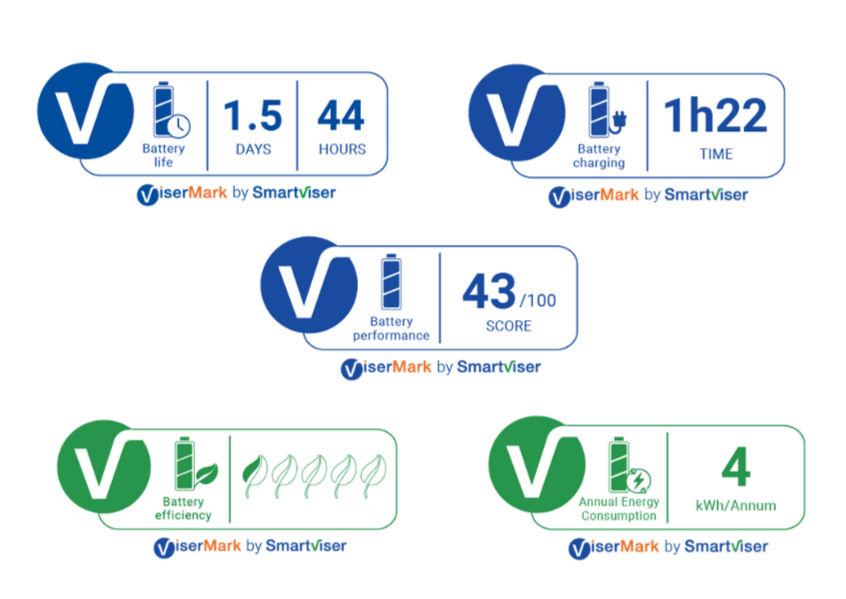
Battery Life: The Xiaomi 15T delivers strong real-world endurance for a performance-oriented device, reaching up to 44 hours of active use, which translates to roughly a day and a half under balanced usage conditions. This places it very close to the high-tier average and clearly ahead of its predecessor, the Xiaomi 14T. Despite its large 6.83-inch AMOLED display, high brightness capability, and more powerful chipset, the 15T maintains stable runtime thanks to improved efficiency in camera, gaming, and mixed-use scenarios. While it does not reach the extended runtimes of efficiency-focused devices with lower performance ceilings, it offers dependable endurance without aggressive background restrictions. For users who want flagship-class responsiveness and multimedia capability while still achieving reliable day-and-a-half battery life, the Xiaomi 15T proves to be a well-balanced and dependable option.
Battery Charging: Charging performance is solid, though not class-leading for the segment. In testing, the Xiaomi 15T required approximately 1 hour and 22 minutes to charge from empty to full, reflecting a more conservative charging curve prioritising battery longevity and thermal stability. While this is slower than some ultra-fast charging competitors, it remains practical for daily use, particularly given the device’s large 5,500 mAh battery capacity. Quick top-ups still provide meaningful recovery during short charging sessions, even if the final stretch to 100% is more gradual. Wireless charging is not supported, but the overall wired charging behaviour favours consistency and battery health over peak headline speeds.
Battery Performance & Efficiency: The Xiaomi 15T stands out through performance-balanced power management rather than extreme energy-saving tuning. Task-based testing shows measurable efficiency gains over the Xiaomi 14T, especially in camera operation, gaming, and media playback, suggesting improved chipset and imaging pipeline optimisation. Annual energy consumption measures at around 4.0 kWh, aligning with high-tier hardware expectations given the large display and sustained performance profile. Its overall battery performance score of 43 reflects this positioning, a device that prioritises output capability while maintaining stable endurance. These results show Xiaomi’s focus on delivering consistent real-world usage without restricting performance, making the Xiaomi 15T a strong option for users who value reliability and power over absolute charging speed or ultra-low energy draw.
Specification Overview - Released Date: September 2025
Body & Build:
Dimensions: 163.2 × 78 × 7.5 mm
Weight: 194 g
Materials: Glass front (Gorilla Glass 7i), plastic frame, fiber-reinforced plastic back
Durability: IP68 – dust-tight and water resistant (immersible up to 3m for 30 minutes)
Design: Large, flat-edged design with slim profile and symmetrical camera module; understated and professional aesthetic; rigid chassis despite plastic frame, with a solid, well-balanced in-hand feel
Display:
Size: 6.83-inch AMOLED
Resolution: 2772 × 1280 pixels, ~447 ppi
Refresh Rate: 120Hz (LTPS, adaptive behaviour via software)
Brightness: Up to 3200 nits peak (HDR, partial area); ~1500+ nits measured in auto mode
HDR Support: Dolby Vision and HDR10+
Protection: Corning Gorilla Glass 7i (Mohs level 6)
Operating System:
OS: Android 15 with HyperOS
Upgrades: Upgradable to Android 16 / HyperOS 3
Support Policy: Up to 4 major Android OS updates and 6 years of security patches (Xiaomi policy as of 2025)
Chipset & Performance:
Processor: MediaTek Dimensity 8400 Ultra (4 nm)
CPU: Octa-core (1× Cortex-A725 @ 3.25 GHz + 3× Cortex-A725 @ 3.0 GHz + 4× Cortex-A725 @ 2.1 GHz)
GPU: Mali-G720 MC7
Thermal Management: IceLoop cooling system for sustained performance
Memory & Storage:
Configurations:
256GB + 12GB RAM
512GB + 12GB RAM
Expandable Storage: Not supported
Storage Technology: UFS 4.1
Connectivity & Features:
Network: GSM / HSPA / LTE / 5G
SIM:
Dual Nano-SIM
Dual Nano-SIM + eSIM (maximum two active at a time)
Wi-Fi: Wi-Fi 6E
Bluetooth: Bluetooth 6.0
NFC: Available (market-dependent)
Infrared Blaster: Yes
USB-C: USB Type-C 2.0 (OTG supported, no video output)
Biometrics: Under-display optical fingerprint sensor
Other Features: Circle to Search, Google Gemini integration, AI photo editing, AI transcription and translation tools, accelerometer, gyroscope, compass, virtual proximity sensor
Audio:
Speakers: Stereo speakers with Dolby Atmos
3.5mm Jack: Not included
Audio Support: 24-bit / 192kHz Hi-Res and Hi-Res Wireless audio
Camera System:
Rear Cameras (Triple Leica-tuned system):
50MP main (f/1.7, OIS, PDAF, 1/1.55" sensor)
50MP telephoto (f/1.9, PDAF, 2× optical zoom)
12MP ultrawide (f/2.2, 120° FoV, fixed focus)
Rear Video:
4K@30/60fps
1080p@30/60/120/240/960fps
10-bit Rec. 2020, HDR10+, gyro-EIS
Front Camera:
32MP selfie camera (f/2.2, fixed focus)
Front Video: 4K@30fps, HDR10+
Colours Available: Black, Gray and Rose Gold
Performance - HOW WE TEST
ViserMark offers a comprehensive range of battery performance test results based on different criteria and benchmarks for evaluating a smartphone's performance. Our tests are performed using the strictest protocol in a controlled environment to ensure repetition and consistency powered by SmartViser's test automation solution viSer.

VWS Analytics Studio is a complementary product to the viSer Test Automation solution. It enhances the viSer user experience and is the fastest way to analyse and view smartphone test results.
We have used the interactive dashboard to show you the recent test results and translated them into ViserMark Labels.
Join our readers to receive the latest update to our smartphone battery performance scores and performance reviews as soon as we finish testing!

Smartphone Battery Performance - FULL TEST RESULTS AND REVIEW
ViserMark has put the Xiaomi 15T through our testing protocol, based on real smartphone usage from 100% battery level down to power off. This includes daily activities, such as calls, web, video and music streaming, gaming, social networks, picture and video capture, and standby. All activities are executed in a defined order and timeline.
These test results, show how the Xiaomi 15T performed and the scores achieved.
1. Battery Performance
The Xiaomi 15T achieved a battery performance score of 43/100, placing it slightly below the high-tier reference average (44.33) and just behind both the Xiaomi 14T and Google Pixel 8a (45). This positions the Xiaomi 15T as a performance-oriented device with a balanced, rather than endurance-focused, power profile. While it does not lead its class in raw efficiency scores, it maintains stable energy behaviour across demanding workloads such as gaming, camera usage, and high-brightness multimedia consumption. The result reflects Xiaomi’s tuning strategy: prioritising sustained performance and display output over aggressive energy saving. Instead of chasing extreme battery benchmarks, the 15T delivers consistent, predictable battery behaviour, which is often more valuable in real-world daily use.

Charging is handled through 67W wired fast charging, with full recharge measured at approximately 1 hour and 22 minutes. This places the Xiaomi 15T in the solid mid-to-upper tier for charging performance, though not among the ultra-fast charging leaders. The charging curve appears deliberately controlled in later stages, suggesting a focus on thermal stability and long-term battery health rather than peak speed figures. As is increasingly common, no charger is included in the box. Wireless and reverse charging are not supported, but the wired solution remains reliable and sufficient for daily routines, particularly considering the device’s large 5,500 mAh battery.ts pricing tier.

Overall, the Xiaomi 15T demonstrates a performance-balanced energy profile. SmartViser workload testing indicates improved efficiency compared to the Xiaomi 14T in camera, gaming, and media tasks, despite similar battery capacity. Annual energy consumption sits around 4.0 kWh, aligning with expectations for a large-display, high-brightness smartphone designed for sustained output. For users, this translates to dependable day-and-a-half endurance without compromising performance responsiveness. The Xiaomi 15T may not be positioned as an ultra-endurance device, but it delivers a stable, well-optimised balance between power, performance, and usability within its category.
2. Battery Life
In ViserMark’s battery life testing, the Xiaomi 15T delivered up to 44 hours of active usage, corresponding to approximately 1.5 days of typical real-world use. This places it closely aligned with the high-tier reference average (43.67 hours / 1.67 days) and ahead of the Xiaomi 14T, which reached 39 hours (1.5 days). While it does not match the longer endurance of the Google Pixel 8a at 48 hours (2 days), the Xiaomi 15T remains firmly within the upper range of performance-focused smartphones rather than efficiency-prioritised devices.

This level of endurance is achieved despite the Xiaomi 15T operating a large 6.83-inch high-brightness AMOLED display and maintaining stable performance under demanding workloads. The results indicate effective power management from the Dimensity platform and Xiaomi’s system optimisation, allowing sustained usage without aggressive background limitations or noticeable performance throttling. Compared with the broader high-tier category, the Xiaomi 15T demonstrates a balanced conversion of battery capacity into usable active time while maintaining strong multimedia and gaming performance.

When compared directly with its closest generational competitor, the Xiaomi 14T, the Xiaomi 15T shows a measurable improvement in active usage hours, particularly in camera operation, media playback, and gaming scenarios. Although the Google Pixel 8a achieves a longer runtime overall, its advantage is linked more closely to conservative power tuning rather than performance output. The Xiaomi 15T instead maintains higher sustained performance during heavy tasks, reflecting a different optimisation philosophy.

For everyday users, the Xiaomi 15T’s day-and-a-half battery life provides reliable coverage for mixed usage patterns including streaming, browsing, social media, navigation, and photography. Even heavier users can comfortably complete a full day with reserve capacity remaining. Overall, the Xiaomi 15T positions itself as a performance-balanced endurance device, delivering consistent battery life that aligns well with its large display and high-output hardware profile within the upper smartphone tier.
The Xiaomi 15T and Xiaomi 14T were analysed for battery consumption across a wide range of everyday tasks using SmartViser's viSer and VWS Analytics Studio. The comparison highlighted differences in power usage for activities such as social media, calls, gaming, camera, and web browsing.
During social media usage, the Xiaomi 15T shows lower power draw than the Xiaomi 14T, indicating better efficiency during continuous scrolling and high screen-on activity. This suggests improved display power management and background process optimisation in the newer model. In outgoing voice calls, the Xiaomi 15T again demonstrates a clear advantage, consuming significantly less power, reflecting more efficient modem and system-level communication handling.
In gaming, both devices perform at a very similar level. The Xiaomi 15T and Xiaomi 14T are effectively on par, with only a negligible difference. This indicates that efficiency under sustained graphical load remains comparable between generations rather than being a major improvement area.
For download and upload tasks, the trend reverses. The Xiaomi 15T actually draws more power than the Xiaomi 14T. This suggests the newer device may be operating at higher throughput or maintaining more aggressive performance states during data transfer, trading a bit of efficiency for speed or responsiveness.
Camera usage is where the Xiaomi 15T shows a major generational gain. The 15T consumes substantially less power than the Xiaomi 14T during extended camera use. Given that camera workloads are among the most demanding tasks, this points to significant optimisation in the imaging pipeline and ISP efficiency in the newer model.

In media-related tasks, results are mixed but lean in favour of the Xiaomi 15T. During YouTube streaming and video replay, the 15T is more efficient in replay but slightly less efficient in streaming. In media player, both are very close, showing near parity. Web browsing also shows minimal difference, with the Xiaomi 14T holding a small efficiency edge.
Overall, the Xiaomi 15T exhibits a more balanced and workload-optimised power profile rather than across-the-board lower consumption. It is clearly more efficient in communication and especially camera operation, roughly equal in gaming and audio playback, but slightly more demanding during data transfer and some streaming scenarios. These differences reflect shifting optimisation priorities: the Xiaomi 15T improves efficiency in high-impact, hardware-intensive tasks like imaging, while maintaining similar or slightly higher consumption in networking-heavy workloads.misation.
When comparing the Xiaomi 15T with the Google Pixel 8a across SmartViser’s battery consumption tests, the differences in optimisation become immediately clear. Although both devices occupy the same mid-tier category, their behaviour under everyday workloads reflects two distinct energy-management approaches.

During social media usage, the Google Pixel 8a draws less power than the Xiaomi 15T, giving it an efficiency advantage in screen-on, app-driven scenarios. The same trend appears in gaming, where the Pixel 8a is noticeably more efficient, suggesting stronger control over sustained graphical workloads. This indicates Google’s platform is tuned to minimise energy draw even when performance demands increase.
In download and upload tasks, the Google Pixel 8a again consumes less power, showing better efficiency during network-intensive activity. YouTube streaming follows the same pattern, with the Pixel maintaining lower consumption during extended video playback sessions.
Camera usage and outgoing call is one of the few areas where the Xiaomi 15T shows an advantage. It draws less power than the Google Pixel 8a during extended camera operation, pointing to more efficient imaging pipeline behaviour under this specific heavy workload.
In voice calls, the Xiaomi 15T is slightly more efficient, consuming less power during sustained communication. However, in YouTube, replay, media player, and web browsing, the Google Pixel 8a consistently records lower energy draw. These are common everyday scenarios, and the Pixel’s advantage here contributes meaningfully to its overall endurance performance.
Overall, the Google Pixel 8a demonstrates broader efficiency leadership across light-to-moderate usage tasks such as browsing, streaming, gaming, and networking. The Xiaomi 15T, in contrast, shows targeted efficiency strengths in camera use and voice communication, while otherwise operating with a slightly more power-demanding but performance-oriented profile. The difference reflects two philosophies, Google emphasises energy conservation across most workloads, while Xiaomi balances efficiency with sustained output in more hardware-intensive scenarios.
When comparing the battery behaviour of the Xiaomi 15T, Xiaomi 14T, Google Pixel 8a, and the high-tier reference using SmartViser’s viSer testing, it becomes clear that each phone approaches power management very differently, and these differences heavily influence real-world endurance.

The Google Pixel 8a is the most consistently efficient device overall. It consumes less power than the other phones in most everyday scenarios, including social media, gaming, data transfer, YouTube streaming, replay, media player, and web browsing. Its tuning clearly prioritises energy conservation across both light and moderate workloads. While it is not the most efficient in camera use or voice calls, its broad efficiency advantage across common daily tasks gives it the strongest overall efficiency profile.
The Xiaomi 15T follows a more performance-balanced strategy. It is clearly more efficient than both the Xiaomi 14T and the Google Pixel 8a in camera usage and also performs strongly in outgoing voice calls, showing focused optimisation in communication and imaging workloads. In gaming, it sits between the Pixel 8a and the high-tier average, indicating balanced efficiency under graphical load. However, in areas such as streaming, media player, social media, and web browsing, it typically draws more power than the Pixel and often slightly more than the high-tier reference, reflecting its more performance-oriented tuning.
The Xiaomi 14T shows the highest consumption in several heavy workloads, particularly camera use and social media activity, and generally draws more power than the Xiaomi 15T. While it remains closer to the high-tier reference in lighter tasks like media player and browsing, it lacks the refinement of the newer model, especially in hardware-intensive scenarios. Its profile reflects a less efficient balance between performance and power compared with the 15T.
Compared with the high-tier reference average, the Google Pixel 8a operates below the norm in most categories, highlighting strong efficiency optimisation. The Xiaomi 15T alternates around this reference, outperforming it in camera and call scenarios but exceeding it in many display- and media-heavy tasks. The Xiaomi 14T more frequently draws above the reference level, indicating higher overall consumption.
In ViserMark’s battery efficiency evaluation, the Xiaomi 15T received a 0.5-leaf rating, placing it below the high-tier reference level and behind both the Xiaomi 14T and the Google Pixel 8a. Within this comparison group, the Pixel 8a holds the strongest efficiency position, while the Xiaomi 15T sits at the more performance-oriented end of the scale. These results indicate that the 15T is not tuned primarily for maximum energy conservation, but instead balances efficiency with sustained hardware output.

This efficiency score reflects the Xiaomi 15T’s behaviour under real-world workloads. While it shows targeted optimisation in camera use and voice communication, it draws more power in many display- and media-heavy tasks such as social media, streaming, and browsing. The device maintains stable performance without aggressive background limitations, but this consistency comes with a slightly higher baseline energy demand compared with more efficiency-focused models.

The lower leaf rating suggests that the Xiaomi 15T relies more on battery capacity and performance management rather than ultra-aggressive power saving. Unlike the Google Pixel 8a, which achieves a higher efficiency score through conservative system tuning, the 15T prioritises responsiveness and sustained performance, particularly in hardware-intensive scenarios like imaging and multitasking.
According to ViserMark’s annual energy consumption testing, the Xiaomi 15T records an estimated usage of around 4 kWh per year, placing it slightly above the high-tier reference average and below the Xiaomi 14T. This result reflects the Xiaomi 15T’s positioning as a performance-balanced device rather than an efficiency-first model, with long-term energy use influenced by its large display, high brightness capability, and sustained hardware performance.

The Xiaomi 14T shows the highest annual energy consumption in this group, aligning with its higher power draw across several demanding tasks such as social media, camera usage, and extended multimedia activity. Its consumption profile indicates a less refined balance between performance and efficiency compared with the newer Xiaomi 15T.

The Google Pixel 8a achieves the lowest annual energy consumption among the devices compared. This reflects its consistently lower power draw in common daily workloads such as browsing, streaming, gaming, and media playback. Its efficiency-focused system tuning enables reduced long-term energy use, even though it operates within the same high-tier category.
Overall, the Xiaomi 15T demonstrates a controlled but performance-oriented energy profile. While it does not match the Pixel 8a’s long-term efficiency, it improves over the Xiaomi 14T and remains reasonably close to the high-tier reference level. This balance allows the Xiaomi 15T to support a large display and high sustained performance while keeping annual energy consumption within a manageable range, positioning it as a capable yet moderately efficient option in the upper smartphone segment.
Who Should Buy the Xiaomi 15T?
The Xiaomi 15T is best suited for users who want a large, high-quality display, strong everyday performance, and a reliable camera system, and who are comfortable with battery behaviour that is balanced for performance, not tuned for maximum efficiency in light media tasks.
This phone is ideal for people who prioritise screen quality and overall device experience. The large, very bright AMOLED panel makes everything look excellent, from apps to video to photos, and it holds up well outdoors. If your focus is visual comfort, immersion, and a near-flagship display experience at a lower price, the 15T delivers strongly here.
It is also a strong fit for users who take a lot of photos and use their camera frequently. Your test results show that the Xiaomi 15T is notably more efficient in camera workloads than both its predecessor and some competitors. That means heavy photo use does not punish the battery as much as expected for a device with this class of imaging hardware. For people who regularly document daily life, events, or travel, this is a practical advantage.
The 15T also suits users who want consistent performance without aggressive power-saving behaviour. It does not rely heavily on background restrictions to stretch battery life, so multitasking, app switching, and longer active sessions feel stable and responsive. If you dislike phones that slow down or kill apps too quickly in the name of battery saving, this behaviour works in your favour.
Where the Xiaomi 15T is not the best match is for users whose day is dominated by long streaming sessions, heavy browsing, and continuous social media scrolling, and who want maximum battery efficiency in those exact activities. Your results show that in tasks like YouTube, web browsing, and several media scenarios, the 15T draws more power than efficiency-focused devices like the Pixel 8a. Battery life is still solid overall, but it achieves that through capacity and balanced tuning rather than class-leading efficiency in display-heavy tasks.
It is also not aimed at hardcore mobile gamers chasing top sustained frame rates, even though gaming performance is stable. Nor is it the right choice for people who insist on features like wireless charging or compact size.
ViserMark VERDICT
The Xiaomi 15T - what's it like to use?
Using the Xiaomi 15T feels like carrying a large, confident, performance-balanced phone that prioritises screen quality, camera usability, and stable responsiveness over ultra-aggressive battery saving.
Day-to-day tasks such as messaging, navigation, multitasking, and general app use feel smooth and reliable. HyperOS runs fluidly, app switching is stable, and the phone doesn’t feel like it’s constantly trying to shut things down in the background to protect battery. That gives the 15T a more natural, “always ready” feel compared with efficiency-first devices that can feel more restrictive.
The 6.83-inch AMOLED display is a defining part of the experience. It’s large, very bright, and visually punchy, which makes video, photos, maps, and general browsing look excellent. Outdoors, visibility is a clear strength. The 120 Hz refresh rate keeps interactions feeling fluid, and combined with the size, this makes the 15T especially comfortable for media and content-heavy use from a visual standpoint.
Where usage diverges from pure “media phone” expectations is in power behaviour. Your test results show that during streaming, long browsing sessions, and extended social media use, the Xiaomi 15T draws more power than efficiency-focused devices like the Pixel 8a and even slightly more than the high-tier reference in some cases. In practice, this means the phone still lasts well, but it is not squeezing maximum runtime out of these screen-heavy tasks. The big, bright display and performance-oriented tuning clearly take priority over ultra-low consumption here.
In contrast, the 15T feels especially well-optimised during camera use and voice calls. Your measurements show clear efficiency gains in camera workloads compared with the previous generation and an advantage over some competitors. For users who take photos frequently throughout the day, this translates into less “battery shock” from heavy camera sessions than you might expect from a large, high-brightness device.
Performance under mixed and heavier use feels stable. Jumping between apps, using navigation while streaming audio, or handling data-heavy apps does not make the phone feel fragile or close to its limits. It maintains responsiveness without sudden slowdowns, which reinforces its identity as a balanced high-tier device rather than a lightly tuned efficiency model.
Gaming performance is solid for mainstream titles, and thermals remain under control, but this is not a gaming-specialist phone designed for sustained maximum frame rates. Similarly, charging is dependable but not extreme: it’s fast enough for daily life, but not part of the “fastest charging in class” race.
VCX (Valued Camera eXperience)
The VCX Forum has been working with its members on the system and infrastructure as a non-profit organisation. We strive to improve our technology to develop and exchange accurate and objective quality and performance indicators, which is our ultimate goal. We will also serve as a compass for the smartphone camera industry. We appreciate your interest in the VCX Forum.
VCX Forum: No review
Background
Xiaomi was founded in 2010 by serial entrepreneur Lei Jun, with a vision to deliver high-quality technology at accessible prices. Committed to a user-centric approach, Xiaomi quickly gained traction in the mobile internet space. By 2014, the company had sold over 61 million smartphones and expanded into key markets including Taiwan, Hong Kong, Singapore, Malaysia, the Philippines, India, Indonesia, and Brazil. Headquartered in Beijing, China, Xiaomi continues its global expansion with offices across the Asia-Pacific region, India, and Brazil, positioning itself as a rising global tech brand.
Written by

Marcella Frattari is the Communication Marketing and Lead Generation Manager at SmartViser, playing a key role in shaping the company's communication and marketing strategies. With a background in journalism and a passion for digital communication, Marcella focuses on improving SmartViser's overall online presence and engagement. Her dedication to clear, effective communication and creative content makes her a valuable asset to the team.
Press Contact
Marcella Frattari: Contact@visermark.com
Our Resources
ViserMark Scores | ViserMark Reviews | Success Stories | Latest Articles |
Discover what ViserMark is all about. | Read ViserMark's latest in-depth smartphone battery reviews. | Discover our main success stories with Telecoms and other industries. | Read more articles on our battery life, performance reviews, and test results. |


Comments